What does a robot do when the GPS signal disappears, the radio connection breaks down, and there are no humans nearby to help?
That problem is something Simon Bøgh and Anton Bjørndahl Mortensen have been working on for years at Aalborg University. Today, they are developing technology at Tess Space that makes autonomous vehicles more self-reliant.
The goal is to enable robots to solve more tasks on their own in areas where humans are exposed to danger or have difficulty operating. This includes transporting supplies, mapping terrain, or collecting data in challenging environments.
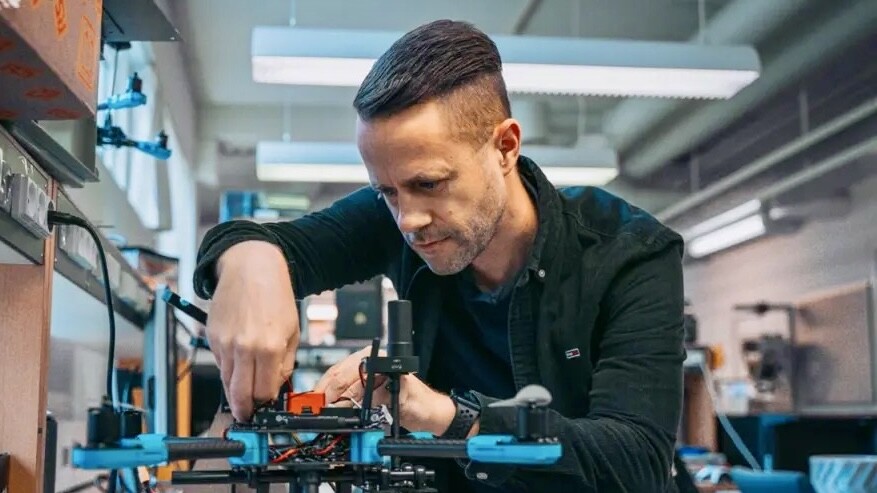
Robots for space provided the answer to an earthly problem
In space, there is no GPS or mobile network. So if a robot encounters a problem, a human cannot always just go out and help it. The robot must therefore be able to understand its surroundings, handle uncertainty, and make decisions on its own.
These are exactly the challenges Simon Bøgh and Anton Bjørndahl Mortensen have been working on at Aalborg University, where they are part of the Advanced Robotics & AI research group. The group conducts research in robotics, artificial intelligence, and space robotics, and has developed technologies for future space missions in collaboration with the European Space Agency (ESA).
Along the way, they began asking themselves: If robots can learn to manage on their own in space, why can’t they do the same on Earth?
“We started to realise that many of the same conditions actually exist here on Earth. Robots often have to operate in areas where GPS signals are unstable or disappear completely, where communication is limited, and where the environment is constantly changing,” says Simon Bøgh.
This became the starting point for Tess Space.
From research to company
The company was founded in 2024, as several developments pulled in the same direction.
“The technology and the market began to align at that time. We had worked for a long time with autonomy in difficult environments, and it became increasingly clear that there was a real need for this type of solution,” explains Simon Bøgh.
At the same time, many of the technologies the solution is built on had matured.
“We now have access to significantly better sensors, far more powerful computers, and enormous amounts of data that can be used to train and improve the systems. It has also become possible to simulate and test far more scenarios digitally before sending a vehicle out into the real world,” he says.
They build the ‘brain’ of the robot
When people hear about autonomous systems, many think of robots, drones, or advanced all-terrain vehicles.
Instead, the company develops the software that makes it possible to give a vehicle a task and let it solve it on its own. The platform consists of three main components: the intelligence in the vehicle itself — an onboard computer for AI-based navigation and control — a sensor package including cameras and LiDAR that helps the system understand its surroundings, and a user interface where the operator can plan, start, and monitor missions.
“We don’t build the vehicles. We build the ‘brain’. That’s the part that enables the systems to understand their surroundings, plan their next steps, and make decisions along the way without constant human control,” explains Simon Bøgh.
He compares it to the difference between building a car and developing the software that allows the car to drive itself. The vehicles can vary, but the need to understand the surroundings, navigate safely, and complete a task is fundamentally the same.
From direct control to task supervision
Today, many unmanned systems still require close supervision. Operators often sit with a joystick or monitor camera feeds and sensor data to ensure the vehicles don’t get stuck or lose orientation.
“What we are working on is moving the operator from driving the robot to giving the robot a task. This could be, for example, transporting supplies from A to B, following a route, or surveying an area. The robot should then be able to find a safe path on its own, avoid obstacles, and continue the mission,” explains Simon Bøgh.
In the long term, the goal is for one operator to be able to supervise multiple robots simultaneously. While one robot transports supplies, another can monitor an area and a third collect data. This reduces the need for personnel and makes it possible to solve tasks that today require far more resources.
At the same time, operators receive continuous data from the vehicles and can monitor the missions in real time. The aim is not to remove humans from decision-making, but to shift the role from active remote control to supervision and decision support.
“We don’t see autonomy as a replacement for humans. We see it as a way to use people’s time better. The operator should still make the important decisions, but shouldn’t have to spend time constantly controlling the vehicle meter by meter,” he emphasises.
Reality: the ultimate test
For the company, the next step was to prove that the technology also worked outside the laboratory.
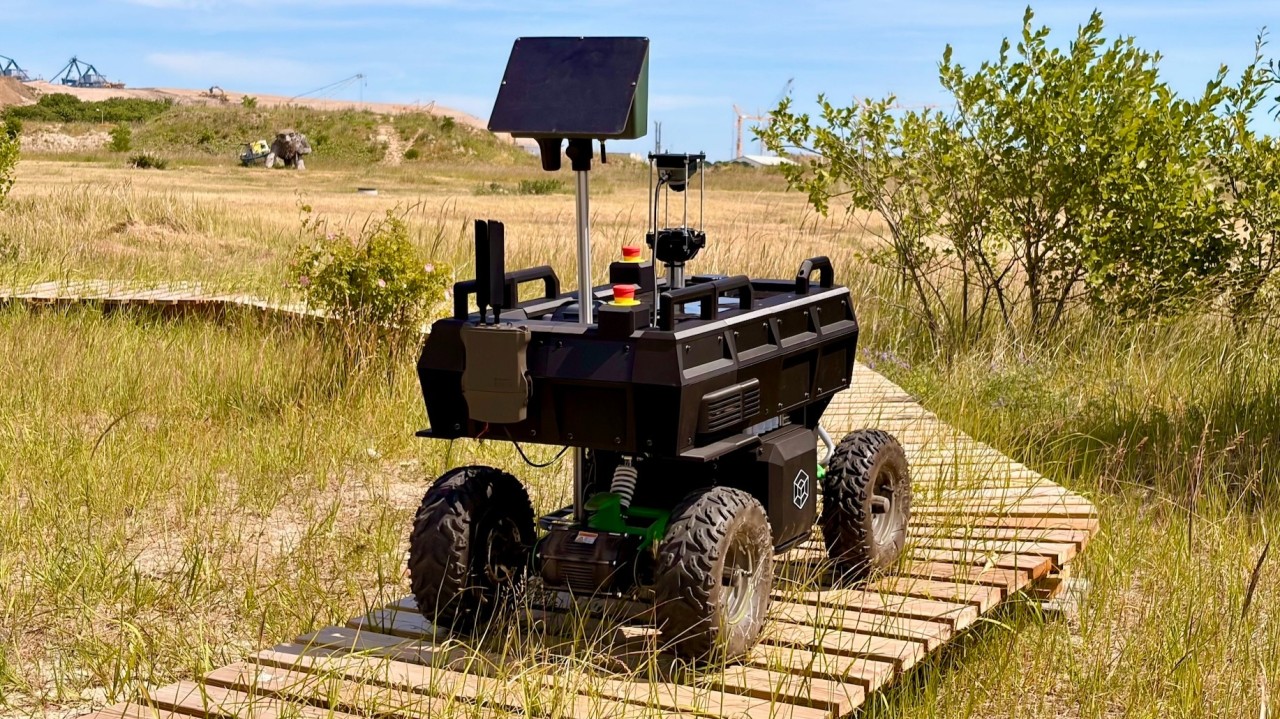
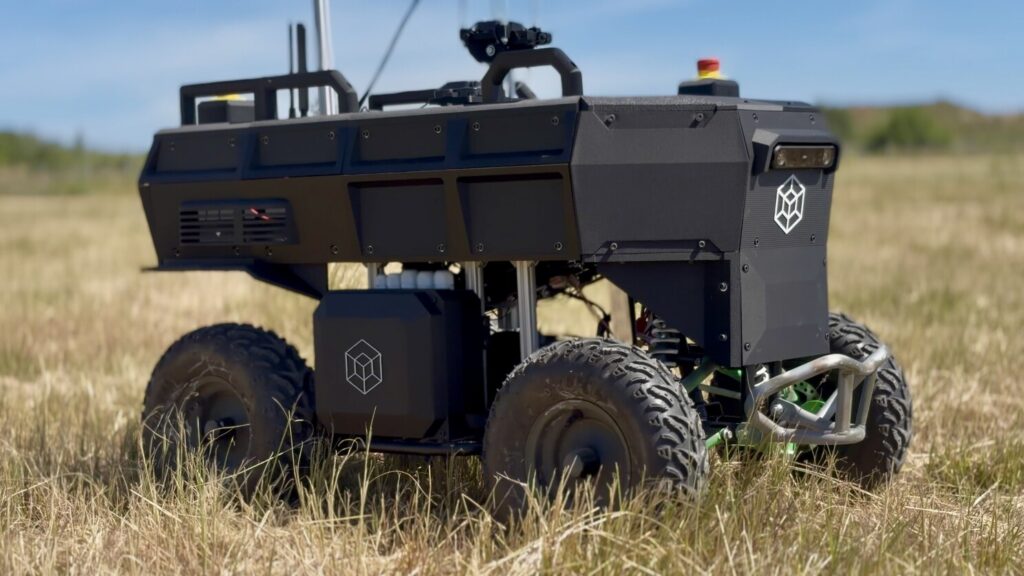
On a closed test site, an all-terrain robot was sent out into uneven terrain with obstacles. The operator started the task, and the system then had to find its own way using cameras, LiDAR, and other sensors. The goal was not just to get the vehicle from A to B, but to explore how much of the task could be solved without constant human intervention.
“The test showed that the operator could hand over far more decisions to the system than with traditional remote control. At the same time, we learned that robust autonomy can only be developed through many hours of testing in real environments. Simulation is important, but it cannot replace field trials,” says Simon Bøgh.
Highly relevant technology
The need for autonomous systems has grown significantly in recent years.
The wars in Ukraine and the Middle East have shown the great value of unmanned systems in environments where humans are exposed to considerable risk. At the same time, both NATO countries and the EU are investing heavily in autonomous systems, artificial intelligence, and defence technology.
One area where Tess Space sees great potential is supply transport in high-risk areas, where autonomous vehicles can deliver equipment or other materiel without exposing personnel to unnecessary danger.
“If an unmanned vehicle can bring supplies forward, help retrieve wounded personnel, or map an area without more people being exposed to risk, then that is exactly the type of challenge we want to help solve,” says Simon Bøgh.
But the perspectives extend far beyond defence.
“Defence is an important area, but we see ourselves as a dual-use company. The core technology can create value in many places where people work under demanding conditions or need better situational awareness,” he stresses.
The technology can, among other things, be used for monitoring critical infrastructure, biodiversity measurements, climate monitoring, and disaster preparedness.
A growing market
Tess Space is entering a market where defence, authorities, and companies are investing heavily in autonomous systems.
Internationally, there are many companies working with similar technologies. While several of them develop complete vehicle platforms, Tess Space focuses on the software that makes the vehicles independent.
“We believe there is great potential in upgrading the systems that already exist. Many organisations have already invested significant resources in their vehicles. That’s why it makes sense to focus on the intelligence and autonomy rather than building new platforms from scratch,” says Simon Bøgh.
From AAU to real missions
Tess Space is based at AAU INNOVATE. In 2025, they were accepted into the ESA Business Incubation Centre and have since entered another contract for a Kick-Start Study to investigate how the technology can be used for measuring and monitoring biodiversity and forestry.
According to Aalborg University, the company illustrates how research can develop from the laboratory into concrete products and businesses.
“We often talk about the need for European technology and digital sovereignty, but it starts with research being turned into companies. Tess Space is an example of how knowledge developed at a Danish university can become technology with potential far beyond the laboratory. This type of company is becoming increasingly important for innovation, competitiveness, and technological independence in Europe,” says Mads Bang, Director of Innovation at Aalborg University.
The next steps are more field trials, new partnerships, and integration on more types of platforms.“We have shown that the technology works in realistic environments. Now it’s about more field tests, integration on more types of vehicles, and validation together with the users who will apply the technology in practice. This is where we can truly create value,” concludes Simon Bøgh.
(Written by: Christian Bugislaus Carstens , BugiVugi Kommunikation.)